Hello from the Indian Ocean!
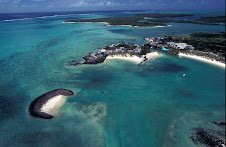
It’s my first time over here in the Indian Ocean. So far so good—as we were rounding the cape of South Africa and entering the Indian Ocean from the Atlantic, I was on the back deck watching the sunset when I saw “the green flash” for the first time. (Just in case you don’t know, the green flash refers to the ray of green light that can be seen by ocean-goers for a half a second as the sun falls completely below the horizon.) If that wasn’t exciting enough, just minutes afterwards I saw a pod of eight to ten humpback whales cruising alongside our ship. It was a very cool welcome to the Indian Ocean. Since then though, the Indian Ocean hasn’t felt much different the Atlantic or the Pacific. Still, the places we’re going to visit in this ocean are going to be nothing like what I’m used to when I’m nested safely between the Atlantic and Pacific back in the US. The next few countries we’re hitting are Mauritius, India, and then over to Vietnam—it should be epic. I’ve been busy with school work for the first time thus far on the voyage (midterms…), but we’re just a day and a half away from the spring break-style vacation island nation of Mauritius now so I thought it was time to share my reflections on the AMAZING country of South Africa.
As much as great of a time as I had in Canada, Spain, Morocco, and Ghana none of them were quite as phenomenal as South Africa. I can’t put my finger on exactly why I loved South Africa so much, but I think it definitely had to do something with the fact that there is a very distinct culture, history, and geography of South Africa, yet it isn’t too unfamiliar. I found myself continually comparing Cape Town to Los Angeles. The sun, the winds, the temperature, the development extending from the coastline all the way up to the bases of the picturesque mountains that surround the city, the ritzy hotels, amazing restaurants, and swanky shops all made Cape Town feel very comfortable and familiar to me. It was this comfort in combination with the crazy safari animals, the Afrikaans speaking people, the bunny-chow dinners (no, they’re not made with rabbit), and probably most of all the friendly and amusing local people that made my South African experience so amazing. I’ll tell you about my favorite South Africans, or SAffers as they call themselves, later.
The first thing we saw when arriving in Cape Town was the stunning Table Mountain that is the backdrop of the city. I wish that I could post pictures because Table Mountain is something that you cannot really be described in words, but unfortunately here on the boat our communication with the outside world is limited to text. [Note from Mom/Martha: I posted a web photo of Table Mountain since Sarah was not able to send one.] When possible I will definitely add images to this blog so you can not only hear about, but also see bits of my adventures.
After a day of discovering Cape Town I flew to Port Elizabeth, in the Eastern Cape, with a group of SAS students looking to find some of Africa’s largest and most impressive wild animals. I went on safari at Kariega Game Reserve which is a large private reserve that is home to all of the “Big Five” (elephants, rhinos, buffalo, leopard, and lions) as well as many other cool safari animals. Although the animals are confined by the electric fences that surround the large reserve, they are all wild animals and are treated as such—the lions are left to kill whatever prey they can take down.
Each day, oftentimes in the early morning and late evening when the animals are most active, my group of eight went out with our ranger, Terry, in our roofless off-roading jeep to search for the many types of animals. Many of the animals were surprisingly difficult to find. I guess it was hard because the reserve was so big, but we didn’t even find elephants (seemingly the easiest animals to find because of their size) until the second day on safari. After three days though we did see everything—from ostriches, to giraffes, to hippos, lions, wildebeest, monkeys, elephants, zebras, rhinos, buffalo, tortoises, many different types of antelope and bird species—everything except for leopards. Leopards are quite hard to find because they live by themselves, hide in trees and tall grasses, and are most active during night. Terry told us leopards are seen by a ranger only once every three weeks or so in Kariega.
There were three other groups of Semester at Sea students at Kariega; each group searched around for animals independently in our separate jeeps. Every night when we all met up for our amazing exotic dinners of kudu, ostrich, and other game there was a sort of competition between the vehicles as to who had seen the best animals, or seen the animals doing the coolest things. For example, seeing two male lions roaring gained your jeep a lot of brownie points.
On the last evening as we were heading in after dark my jeep decided we were going to ‘see a leopard.’ Everyone got super into the idea so we discussed the details of how we saw it: “when we were driving back from seeing the hippos it was walking across the path, it saw us, and then jetted for the bushes. It was hard to see, but it was quite a bit smaller than the lions.” We didn’t even know what a leopard really looked like so we had to get the details from Ranger Terry. He also got really into the idea of a leopard sighting. Terry said asked us, “are you guys really going to do this? Because if you stick with it, I’ll call it in on the radio. But if I do then it really happened, because I could get in a lot of trouble for falsely reporting a sighting.” So my group decided we’d stick with the lie. At dinner we told everyone our elaborate story and, needless to say, they were all very jealous. Terry got a lot of props from the other rangers, too, but they seemed to quiz us about the leopard, almost as if they didn’t believe Terry. It wasn’t until we were back on the ship where Terry couldn’t get into any trouble that we finally broke and admitted to the other groups it was a big fabrication. We had a number of good laughs about it.
The most interesting piece of knowledge that I learned on safari—knowledge that I feel I should spread to you all—was that of the correct terminology for groups of different species. I’ll tell you some of the best: “raft” of hippos, “troop” of monkeys, “pride” of lions, “crèche” of rhinos, “dazzle” of zebras, “journey” of giraffes, and my favorite: “implausibility” of wildebeest. I also had “peck” of hyenas on my list until Terry saw what I was writing and corrected me saying that the collective term for hyenas was very easy—they’re simply in a “pack.”
This was not the only time I had trouble comprehending the South African vernacular. When hanging out with my favorite two locals, Dean and Dan, I was always very focused when they were speaking, attempting to figure out which words were slang and which words I knew very well but I just thought were slang because of the way SAffers pronounced them. At one point there was an entire sentence I didn’t understand. I let it go as I sometimes did when I thought the statement didn’t require a response from me. Still, later I admitted there was a moment “when it sounded like [they] were speaking a foreign language.” Dan and Dean laughed and admitted that I wasn’t crazy. They were actually speaking a different language—they were speaking Afrikaans (the other main language of South Africa). As you can tell, despite the fact that South Africans speak English, communication was not always fluid. Still, I really think this added to the fun and excitement.
One of the many, many reasons I loved South Africa was, once again, because of the lasting influence of the British Empire. It is so nice being in countries where the main language of the people is English. It’s not even the convenience of being able to find my way around or knowing exactly what I’m eating for dinner, it’s the experience of meeting the locals. Talking with and hanging out with the SAffers may have been the best part of my entire stay in South Africa. Just comparing things that we have versus what they have or what we say versus what they say is so much fun. They had a ton of slang words, most of which were completely foreign to me because they were Afrikaans words, but I picked up a few that I like. My favorite is more of a SAffer phrase than a SAffer word; instead of saying “that sucks,” SAffers say “that’s not ideal.” They’re classy like that. They also thought speaking with us was really fun/funny; at one point Dean said to me, “I feel like I’m in the movies when I talk with you.” There was a genuine interest in the lifestyle of the other party that made the conversations between the South Africans and us Americans last for hours. I spent the entirety of my last day in South Africa just hanging out by the spectacular Kalk Bay with a Semester at Sea friend and our new SAffer friends just watching the seals, drinking beer, eating fish and chips, and chatting. I wish so much that I could just do that for weeks.
I loved South Africa so much I’ve spent the last few days ignoring my Global Studies midterm and scheming as to how I can get an internship in Cape Town or go to the 2010 World Cup to get back there. If anyone has any ideas, let me know!
There is so much more I could tell you all about South Africa because it really was that amazing. Unfortunately, I need to be off to get on that studying because my midterm is in eight hours. When I’m home though, just ask, and I’ll go on for hours with many more stories.
Go Phils! Beat LA!
Wednesday, October 14, 2009

Thursday, October 1, 2009
Ghana, Togo & Benin
Hello all!
I’ve been back on the ship for a few days after my first experience in sub-Saharan Africa! We visited Ghana, Togo, and Benin (three little countries next to each other on the coast at about seven degrees north of the equator). Because these countries are so underdeveloped none of them have a real tourism industry but we managed to find our way around and figured out things to do so it was an amazing time.
Really the best part of being in Ghana, Togo, and Benin was getting to know the locals. They were by far the friendliest group people I have ever encountered in my life. The locals were constantly coming up to us just to chat. At first we were always very skeptical [as we had been taught to be in Morocco] but we later realized that 95% of the people who approached us really just wanted to talk with some foreigners and get to know us. Though we got many funny questions about being white (not kidding) and a number of marriage proposals, it was so fun hearing about life in Ghana. One thing that struck me was that despite their great poverty most of the people I met seemed genuinely happy. They were fully aware of how much more we have than they do but they are very accepting of this and they have a lot of faith in God so they were content, if not pleased, with their lives.
We, being the mostly white group of Semester at Sea students, were definitely a novelty to the Ghanaians. I realized after only a few hours that we are much more used to seeing people of other races than they are. I could count the number of non-SAS white people that I saw during my four day stay on two hands. Wherever we traveled we got starred at, not in a bad way really, they were just very curious. Still, people gave us friendly waves as we drove by and occasionally kids would break out in dance putting on a show for us. I was later told that we were the largest group of Americans to ever arrive in Ghana at once—as I said, it’s not really a travel destination but I loved it.
Still, there were a few sites to see in addition to just discovering the natural beauty and local culture of Ghana, Togo, and Benin. In Benin I took a tour of a village named Ganvie that is built literally in the middle of a lake. In old wooden boats powered by outboard engines with no covers we made the eight kilometer journey to the middle of the lake where there’s a population of several thousand people living in houses built on wooden stilts. The stilts were no more than small trees cut down and stuck in the mud under houses made of wood and palm leaves. The people really do live there all of the time though—they said they have to take the children to a nearby island so they can learn to walk on solid land. The village was founded three hundred years ago because a rival tribe was trying to kill/rape/pillage a weaker tribe. This weaker tribe decided the safest place for them to hide was in plain sight in the middle of the lake and clearly they were right because the same tribe remains there today. Ganvie was probably my favorite place I visited in Ghana, Togo, and Benin. It was like something straight out of National Geographic.
On my last day I saw what I think are the two biggest tourist attractions in Ghana—and there was no one there but us SAS students. In the morning I visited my first rainforest! Kakum National Park has walkways 120 feet up in the canopy so we were able to observe the rainforest from quite high up. It was really fun but unfortunately I didn’t see any elephants, leopards, monkeys, or anything cool like that. Later that day we went to Elmina Castle, the oldest and largest set of slave dungeons in sub-Saharan Africa. It was quite a humbling experience after such a cheery morning parading around in a beautiful rainforest. Walking through the small, grungy cells in which literally millions of African captives died or passed through on their journey to slavery in the Americas made one really take in the history. Because such a huge portion of American slaves came from Elmina Castle I couldn’t help but wonder if any of the black SAS students in our group have ancestors that passed through “the gate of no return.” My mind then drifted to whether I have any ancestors that had enslaved these Africans—after all, it was the Dutch who ran the operations out of Elmina Castle for most of its history. It was a depressing but powerful experience. I’m glad I was able to see it.
Looking back I’m surprised I wasn’t more depressed by the conditions the local people were living in. It was definitely a third world country. Almost every house I saw was a one room cottage made of concrete blocks or wood and palm leaves. None of these residences had electricity or running water; they all used little oil lamps at night and brought freshwater to their homes by carrying it in buckets on their heads. (Not to be insensitive, but it seems that all Ghanians have this amazing skill in that they can carry just about anything of any weight on their heads. It’s not something they just show on the Discovery Channel.) I guess it wasn’t extremely disheartening to see these people in such a poor state because they did seem so content. The people of Ghana, Togo, and Benin need help though—Benin has an illiteracy rate of 65% and Ghana, perhaps the most advanced country in sub-Saharan African other than South Africa, has an illiteracy rate of about 50%.
Another aspect of culture in these countries that really struck me was the lasting effect of colonialism on African nations. This was most obvious in the languages they speak. In Ghana everyone speaks English with a few native words thrown in here and there, and then as soon as you cross the border to Togo and Benin everyone speaks French. [Who knew it was so easy to communicate with Africans?!] Though I don’t speak French I keep some intelligent foreigners around to help me out. On the ship I’ve made friends with a number of Spanish speaking guys: Agustin and Daniel from Columbia, another Agustin from Argentina, Pedro from Mexico, and Ikar from Spain. I hang out with them and seriously feel like I'm in Vicky Christina Barcelona--they're all going off in Spanish and every few minutes one of them will say "speak English for Sarah" or "say it again in English." It’s proved useful being with these guys in all of the ports thus far though; not only do they speak fluent Spanish and English but they also speak fluent French and dabble in Italian and German. Still, being around them makes me increasingly aware of how egocentric Americans are. We are the only culture in which it is completely normal and acceptable for educated people to know only one language. Unfortunately, I’m no exception to this stereotype but spending so much time with the “Latin Lovers,” as they were dubbed for their performance in the SAS talent show, my Spanish is starting to come back to me a bit.
As for food in Ghana—it was amazing. It was the last place I expected to find delicious food particularly because we had been warned so many times about getting Hepatitis A, typhoid, and so many other ailments from eating the local food, but it was the first port we have visited in which I enjoyed everything I ate. They had a lot of standard foods such as rice, potatoes and chicken but they had great stew-like sauces that they would cover them with. I also had delicious goat, crepes with mushrooms inside, avocado salad, fresh fish, and my favorite, fried plantains. Luckily, I didn’t get sick from eating any of these foods either! …Ghana did make me ill later though. Someone brought a stomach bug on board the ship and it spread like wildfire in the days following our departure. I finally understand why they have people standing outside the dining halls and outside of the union whose only job is to make sure everybody sanitizes their hands on passing.
Now that we’re back on the ship everyone’s been busy with classes. We all have papers and tests now for the first time so it’s actually starting to feel like school. We did cross the equator a few days ago though so we got off of class to celebrate “Neptune Day.” As rumored many people did shave their heads, including 15 girls. I admire their bravery but I think some of them might be starting to regret their decisions. I’d say at least 60 to 100 guys shaved their heads as well. We definitely have enough skinheads for all of the stand-ins needed to make American History X.
We reach South Africa in just three days now. I’ll be safari-ing and just checking out Cape Town which I hear is amazing. Will write back on the way to Mauritius!
svc
I’ve been back on the ship for a few days after my first experience in sub-Saharan Africa! We visited Ghana, Togo, and Benin (three little countries next to each other on the coast at about seven degrees north of the equator). Because these countries are so underdeveloped none of them have a real tourism industry but we managed to find our way around and figured out things to do so it was an amazing time.
Really the best part of being in Ghana, Togo, and Benin was getting to know the locals. They were by far the friendliest group people I have ever encountered in my life. The locals were constantly coming up to us just to chat. At first we were always very skeptical [as we had been taught to be in Morocco] but we later realized that 95% of the people who approached us really just wanted to talk with some foreigners and get to know us. Though we got many funny questions about being white (not kidding) and a number of marriage proposals, it was so fun hearing about life in Ghana. One thing that struck me was that despite their great poverty most of the people I met seemed genuinely happy. They were fully aware of how much more we have than they do but they are very accepting of this and they have a lot of faith in God so they were content, if not pleased, with their lives.
We, being the mostly white group of Semester at Sea students, were definitely a novelty to the Ghanaians. I realized after only a few hours that we are much more used to seeing people of other races than they are. I could count the number of non-SAS white people that I saw during my four day stay on two hands. Wherever we traveled we got starred at, not in a bad way really, they were just very curious. Still, people gave us friendly waves as we drove by and occasionally kids would break out in dance putting on a show for us. I was later told that we were the largest group of Americans to ever arrive in Ghana at once—as I said, it’s not really a travel destination but I loved it.
Still, there were a few sites to see in addition to just discovering the natural beauty and local culture of Ghana, Togo, and Benin. In Benin I took a tour of a village named Ganvie that is built literally in the middle of a lake. In old wooden boats powered by outboard engines with no covers we made the eight kilometer journey to the middle of the lake where there’s a population of several thousand people living in houses built on wooden stilts. The stilts were no more than small trees cut down and stuck in the mud under houses made of wood and palm leaves. The people really do live there all of the time though—they said they have to take the children to a nearby island so they can learn to walk on solid land. The village was founded three hundred years ago because a rival tribe was trying to kill/rape/pillage a weaker tribe. This weaker tribe decided the safest place for them to hide was in plain sight in the middle of the lake and clearly they were right because the same tribe remains there today. Ganvie was probably my favorite place I visited in Ghana, Togo, and Benin. It was like something straight out of National Geographic.
On my last day I saw what I think are the two biggest tourist attractions in Ghana—and there was no one there but us SAS students. In the morning I visited my first rainforest! Kakum National Park has walkways 120 feet up in the canopy so we were able to observe the rainforest from quite high up. It was really fun but unfortunately I didn’t see any elephants, leopards, monkeys, or anything cool like that. Later that day we went to Elmina Castle, the oldest and largest set of slave dungeons in sub-Saharan Africa. It was quite a humbling experience after such a cheery morning parading around in a beautiful rainforest. Walking through the small, grungy cells in which literally millions of African captives died or passed through on their journey to slavery in the Americas made one really take in the history. Because such a huge portion of American slaves came from Elmina Castle I couldn’t help but wonder if any of the black SAS students in our group have ancestors that passed through “the gate of no return.” My mind then drifted to whether I have any ancestors that had enslaved these Africans—after all, it was the Dutch who ran the operations out of Elmina Castle for most of its history. It was a depressing but powerful experience. I’m glad I was able to see it.
Looking back I’m surprised I wasn’t more depressed by the conditions the local people were living in. It was definitely a third world country. Almost every house I saw was a one room cottage made of concrete blocks or wood and palm leaves. None of these residences had electricity or running water; they all used little oil lamps at night and brought freshwater to their homes by carrying it in buckets on their heads. (Not to be insensitive, but it seems that all Ghanians have this amazing skill in that they can carry just about anything of any weight on their heads. It’s not something they just show on the Discovery Channel.) I guess it wasn’t extremely disheartening to see these people in such a poor state because they did seem so content. The people of Ghana, Togo, and Benin need help though—Benin has an illiteracy rate of 65% and Ghana, perhaps the most advanced country in sub-Saharan African other than South Africa, has an illiteracy rate of about 50%.
Another aspect of culture in these countries that really struck me was the lasting effect of colonialism on African nations. This was most obvious in the languages they speak. In Ghana everyone speaks English with a few native words thrown in here and there, and then as soon as you cross the border to Togo and Benin everyone speaks French. [Who knew it was so easy to communicate with Africans?!] Though I don’t speak French I keep some intelligent foreigners around to help me out. On the ship I’ve made friends with a number of Spanish speaking guys: Agustin and Daniel from Columbia, another Agustin from Argentina, Pedro from Mexico, and Ikar from Spain. I hang out with them and seriously feel like I'm in Vicky Christina Barcelona--they're all going off in Spanish and every few minutes one of them will say "speak English for Sarah" or "say it again in English." It’s proved useful being with these guys in all of the ports thus far though; not only do they speak fluent Spanish and English but they also speak fluent French and dabble in Italian and German. Still, being around them makes me increasingly aware of how egocentric Americans are. We are the only culture in which it is completely normal and acceptable for educated people to know only one language. Unfortunately, I’m no exception to this stereotype but spending so much time with the “Latin Lovers,” as they were dubbed for their performance in the SAS talent show, my Spanish is starting to come back to me a bit.
As for food in Ghana—it was amazing. It was the last place I expected to find delicious food particularly because we had been warned so many times about getting Hepatitis A, typhoid, and so many other ailments from eating the local food, but it was the first port we have visited in which I enjoyed everything I ate. They had a lot of standard foods such as rice, potatoes and chicken but they had great stew-like sauces that they would cover them with. I also had delicious goat, crepes with mushrooms inside, avocado salad, fresh fish, and my favorite, fried plantains. Luckily, I didn’t get sick from eating any of these foods either! …Ghana did make me ill later though. Someone brought a stomach bug on board the ship and it spread like wildfire in the days following our departure. I finally understand why they have people standing outside the dining halls and outside of the union whose only job is to make sure everybody sanitizes their hands on passing.
Now that we’re back on the ship everyone’s been busy with classes. We all have papers and tests now for the first time so it’s actually starting to feel like school. We did cross the equator a few days ago though so we got off of class to celebrate “Neptune Day.” As rumored many people did shave their heads, including 15 girls. I admire their bravery but I think some of them might be starting to regret their decisions. I’d say at least 60 to 100 guys shaved their heads as well. We definitely have enough skinheads for all of the stand-ins needed to make American History X.
We reach South Africa in just three days now. I’ll be safari-ing and just checking out Cape Town which I hear is amazing. Will write back on the way to Mauritius!
svc
Tuesday, September 22, 2009
Ship Life
Hey everyone!
I have a bit of downtime on our long trek from Morocco to Ghana so I thought I’d fill you in on a few more details about life at sea. Though I have so many interesting experiences within the countries we visit, living on the MV Explorer is an experience in itself and is definitely worth talking about.
It’s been pretty hot out recently so most of us on the ship have been spending a lot of time up on the seventh deck sunbathing and swimming. Today I spent a good part of the afternoon in the pool getting beat up by some of the professors’ young boys. All that the five, six, and eight year old boys wanted to do was chicken-fight in the pool. Though Luke, the six year-old I had on my shoulders for over an hour, and I were quite the chicken-fighting team, I was constantly struggling to not inhale the salt water. Strength was not an issue but the other two boys had young men supporting them who had a few inches of height on me. Luke and I held our own but had a bit of trouble when we got cornered into the deeper end. I would end up underwater without air until the rolling of the ship forced the water to the other side of the pool at which moment I could snatch a breath of much needed oxygen. Even though I was having trouble getting air, my eyes were burning, and my neck was aching it was a good time.
While we’re on the outside decks by the pool or at dinner we’ll often see a group of people rush towards the railing—somehow watching dolphins never gets old. It is pretty cool though, it’s a reminder that we really are in the middle of an ocean that other creatures really do inhabit. Though it seems strange that we would just forget we’re on a ship, when you go about with your daily life of classes, friends, etc. the fact that we’re in the ocean drifts to the back of your mind.
Another time we are suddenly reminded that we’re on a ship is when we have “muster drills” to prepare in case of a fire or other emergency that could occur on the MV Explorer. “Please report to your muster stations” calls everyone onboard the ship into action. I wish could somehow portray a British accent via text but unfortunately there is no good way to represent Captain Jeremy’s perfectly calm English voice in a blog. Just know that it’s the type of voice you would want to hear if someone had to tell you there was a serious fire on the ship—you’d almost think everything was going to be completely fine. With that said, muster drills are no joke. When alerted everybody has to quickly get to their cabin; dress in warm clothes, close-toed shoes, and a ball cap; put their life jacket on; and report to their designated muster stations (aka. our area that’s close to the lifeboats so we could abandon if necessary). At first we didn’t think it was such a big deal, but it’s the only time you’ll see the crew really serious. The first drill one student had flip-flops on so the crew chastised him and then hid him in the back of the crowd so Captain Jeremy wouldn’t see bare feet on his walk through. It started to feel a bit like Titanic the first time they told us “women and children in the front.”
As for clubs on the ship, I’m involved in the dive club, “Green Group,” and the group informally known as “I want to get a good job this summer” club. The dive club is just as it sounds—we’re planning trips while we’re in Mauritius and Hawaii. Thus far I’m the most experienced diver I’ve met certification wise. When people ask if I’m PADI and I tell them “yes, I’m a Rescue Diver” they’re always very impressed so that’s always a nice little ego boost.
As for Green Group, you can probably figure out what we do. Our goal is simply to raise awareness about environmental issues. We’re writing e-mails to our Senators to show our support for the climate bill that just passed the House and trying to encourage others to do so as well. I’m also going to be giving a seminar on “How Saving the Environment Can Peacefully Prevent Terrorism.” My presentation will be based on a chapter on ‘petro-dictatorships’ from Thomas Friedman’s Hot, Flat, and Crowded. I strongly suggest anyone who is at all interested to read Friedman’s book and particularly that chapter (Chapter 4) because it was truly eye-opening for me. Dad, I know of all people you probably think I’m crazy but just read that one chapter—I honestly think you will find it interesting. It may sound like I’m becoming a “fanatical liberal,” but for the record I don’t consider myself a liberal, just someone who is very concerned for the environment.
The other group I’m involved with—the “I want a good job this summer” club—is basically just a networking/tips on finding good internships and jobs group that meets every once in a while. Though it seems dorky I’ve already met some great contacts. As it turns out two people that I knew quite well already, one of my professors and a Life-Long-Learner friend from geography class, could really help me find a job in finance and/or environmental consulting. I was pretty excited to get to talk with these guys about their specific fields and they’ve already given me some great ideas and tips on how I might find the perfect summer internship.
A little more about life on the MV Explorer—there are several professors who really stand out and influence everyone, even those who are not their students. One man like that is our music professor on the ship who is the epitome of the absent minded professor. He can pick up any instrument and get lost in it—it’s so cool to watch him. During our cultural pre-port for Ghana he got up on stage and started doing some really cool drums, bells, etc that he learned when he was in a band with a bunch of Ghanaians. He then put some Ghanaian music on and started to show us some traditional Ghanaian dancing (this guy is very white, too). Soon the inter-port lecturer, who’s a professor from Ghana, got up and started dancing with him and not long after many students followed. It was awesome. Not to mention that Dean Bob had just rapped our entire lecture on Ghana’s culture because he was worried we were going to get too bored otherwise. The professors here are exceptionally outgoing, fun people—I guess you’d have to be to want to live with five hundred college kids on a ship traveling the world for a whole semester.
I hadn’t thought about it until recently but living on a ship for four months creates an immense sense of community. We do absolutely everything together. From breakfast, lunch, dinner, and “snack time” to class, meetings, and downtime, the same seven hundred of us are on the ship 24/7 oftentimes for seven days at a time. Seven hundred people may seem like a lot but when you spend literally your entire day every day for the majority of four months with your classmates, professors, and professor’s families you get to know the people really well. Two days ago there was a talent show and I realized how many little ‘inside jokes’ we had that the entire shipboard community was in on. It’s only been three weeks but I can already tell that when we get off the ship in San Diego it is going to be so hard to say goodbye to the extremely closely-knit society. I know this sounds really cheesy but I don’t think you can truly understand it unless you’ve been in the rare situation where your classmates and professors are the only people you actively have contact with for several months.
As we head for Ghana we’re approaching the equator quite rapidly. We are reminded of this every time we step out on the back deck into the extremely muggy heat. Though we stop in Ghana first, in a week from now we’ll be celebrating the actual day we make our equatorial crossing with “Neptune Day” festivities. I’m not sure exactly what this involves but I hear all of the guys, and even some of the girls, shave their heads. I heard something about kissing fish and then putting their guts on your head, too. The rumors make it sound like a cult ritual but luckily shaving one’s head is not required for females so I’m excited to see what other interesting rituals happen when the MV Explorer enters the Southern Hemisphere.
Will write back soon to fill you in on both Neptune Day and Ghana!
svc
I have a bit of downtime on our long trek from Morocco to Ghana so I thought I’d fill you in on a few more details about life at sea. Though I have so many interesting experiences within the countries we visit, living on the MV Explorer is an experience in itself and is definitely worth talking about.
It’s been pretty hot out recently so most of us on the ship have been spending a lot of time up on the seventh deck sunbathing and swimming. Today I spent a good part of the afternoon in the pool getting beat up by some of the professors’ young boys. All that the five, six, and eight year old boys wanted to do was chicken-fight in the pool. Though Luke, the six year-old I had on my shoulders for over an hour, and I were quite the chicken-fighting team, I was constantly struggling to not inhale the salt water. Strength was not an issue but the other two boys had young men supporting them who had a few inches of height on me. Luke and I held our own but had a bit of trouble when we got cornered into the deeper end. I would end up underwater without air until the rolling of the ship forced the water to the other side of the pool at which moment I could snatch a breath of much needed oxygen. Even though I was having trouble getting air, my eyes were burning, and my neck was aching it was a good time.
While we’re on the outside decks by the pool or at dinner we’ll often see a group of people rush towards the railing—somehow watching dolphins never gets old. It is pretty cool though, it’s a reminder that we really are in the middle of an ocean that other creatures really do inhabit. Though it seems strange that we would just forget we’re on a ship, when you go about with your daily life of classes, friends, etc. the fact that we’re in the ocean drifts to the back of your mind.
Another time we are suddenly reminded that we’re on a ship is when we have “muster drills” to prepare in case of a fire or other emergency that could occur on the MV Explorer. “Please report to your muster stations” calls everyone onboard the ship into action. I wish could somehow portray a British accent via text but unfortunately there is no good way to represent Captain Jeremy’s perfectly calm English voice in a blog. Just know that it’s the type of voice you would want to hear if someone had to tell you there was a serious fire on the ship—you’d almost think everything was going to be completely fine. With that said, muster drills are no joke. When alerted everybody has to quickly get to their cabin; dress in warm clothes, close-toed shoes, and a ball cap; put their life jacket on; and report to their designated muster stations (aka. our area that’s close to the lifeboats so we could abandon if necessary). At first we didn’t think it was such a big deal, but it’s the only time you’ll see the crew really serious. The first drill one student had flip-flops on so the crew chastised him and then hid him in the back of the crowd so Captain Jeremy wouldn’t see bare feet on his walk through. It started to feel a bit like Titanic the first time they told us “women and children in the front.”
As for clubs on the ship, I’m involved in the dive club, “Green Group,” and the group informally known as “I want to get a good job this summer” club. The dive club is just as it sounds—we’re planning trips while we’re in Mauritius and Hawaii. Thus far I’m the most experienced diver I’ve met certification wise. When people ask if I’m PADI and I tell them “yes, I’m a Rescue Diver” they’re always very impressed so that’s always a nice little ego boost.
As for Green Group, you can probably figure out what we do. Our goal is simply to raise awareness about environmental issues. We’re writing e-mails to our Senators to show our support for the climate bill that just passed the House and trying to encourage others to do so as well. I’m also going to be giving a seminar on “How Saving the Environment Can Peacefully Prevent Terrorism.” My presentation will be based on a chapter on ‘petro-dictatorships’ from Thomas Friedman’s Hot, Flat, and Crowded. I strongly suggest anyone who is at all interested to read Friedman’s book and particularly that chapter (Chapter 4) because it was truly eye-opening for me. Dad, I know of all people you probably think I’m crazy but just read that one chapter—I honestly think you will find it interesting. It may sound like I’m becoming a “fanatical liberal,” but for the record I don’t consider myself a liberal, just someone who is very concerned for the environment.
The other group I’m involved with—the “I want a good job this summer” club—is basically just a networking/tips on finding good internships and jobs group that meets every once in a while. Though it seems dorky I’ve already met some great contacts. As it turns out two people that I knew quite well already, one of my professors and a Life-Long-Learner friend from geography class, could really help me find a job in finance and/or environmental consulting. I was pretty excited to get to talk with these guys about their specific fields and they’ve already given me some great ideas and tips on how I might find the perfect summer internship.
A little more about life on the MV Explorer—there are several professors who really stand out and influence everyone, even those who are not their students. One man like that is our music professor on the ship who is the epitome of the absent minded professor. He can pick up any instrument and get lost in it—it’s so cool to watch him. During our cultural pre-port for Ghana he got up on stage and started doing some really cool drums, bells, etc that he learned when he was in a band with a bunch of Ghanaians. He then put some Ghanaian music on and started to show us some traditional Ghanaian dancing (this guy is very white, too). Soon the inter-port lecturer, who’s a professor from Ghana, got up and started dancing with him and not long after many students followed. It was awesome. Not to mention that Dean Bob had just rapped our entire lecture on Ghana’s culture because he was worried we were going to get too bored otherwise. The professors here are exceptionally outgoing, fun people—I guess you’d have to be to want to live with five hundred college kids on a ship traveling the world for a whole semester.
I hadn’t thought about it until recently but living on a ship for four months creates an immense sense of community. We do absolutely everything together. From breakfast, lunch, dinner, and “snack time” to class, meetings, and downtime, the same seven hundred of us are on the ship 24/7 oftentimes for seven days at a time. Seven hundred people may seem like a lot but when you spend literally your entire day every day for the majority of four months with your classmates, professors, and professor’s families you get to know the people really well. Two days ago there was a talent show and I realized how many little ‘inside jokes’ we had that the entire shipboard community was in on. It’s only been three weeks but I can already tell that when we get off the ship in San Diego it is going to be so hard to say goodbye to the extremely closely-knit society. I know this sounds really cheesy but I don’t think you can truly understand it unless you’ve been in the rare situation where your classmates and professors are the only people you actively have contact with for several months.
As we head for Ghana we’re approaching the equator quite rapidly. We are reminded of this every time we step out on the back deck into the extremely muggy heat. Though we stop in Ghana first, in a week from now we’ll be celebrating the actual day we make our equatorial crossing with “Neptune Day” festivities. I’m not sure exactly what this involves but I hear all of the guys, and even some of the girls, shave their heads. I heard something about kissing fish and then putting their guts on your head, too. The rumors make it sound like a cult ritual but luckily shaving one’s head is not required for females so I’m excited to see what other interesting rituals happen when the MV Explorer enters the Southern Hemisphere.
Will write back soon to fill you in on both Neptune Day and Ghana!
svc
Friday, September 18, 2009
Moroc
Moroc is by far the most different place I’ve ever been in. (Yes, the real name of the country is “Moroc.” Someone along the way decided that its name needed to be lengthened for the English language so somehow “Moroc” became “Morocco.”) I realized just days before we arrived in Casablanca that I really knew nothing about Morocco—not its language, its climate, its history, its politics, anything. I had no idea what to expect until our pre-port lecture which gave me only a bit of an idea of what I was about to see in the North African nation.
On arrival to Casablanca all that was in sight were shipyards and mountains of phosphorus exposed to the open air (in case you don’t know, phosphorus particulate matter is not something you want regularly inhaled by the population of your country’s largest city, but there it was regardless). To add to the negative image already painted by Morocco’s largest port, Semester at Sea said they hired a shuttle bus so that we didn’t have to risk the walk through Casablanca’s shady shipyards.
Though intimidating at first, Morocco turned out to be an amazing experience. I went on a trip arranged by Semester at Sea to Marrakech, Morocco’s most visited city, and into the Sahara Desert for a “camel trek” and overnight stay in a nomad tent. It was awesome, just at little unnerving at times and, for lack of a better word, crazy.
The first day in Morocco we went to the “souks” of Marrakech. These are little shops lined up close together in the old part of the city where locals sell crafts and foods, often to tourists like us. I was traveling with three friends of mine and in that moment I’m pretty sure they kept me from being ripped off and/or kidnapped. It was so overwhelming at first—there were people shouting at me in both French and English telling me to “just look,” motorcycles and donkey-drawn wagons whizzing by me in the tiny alleyways, and in every direction there were Moroccans, of whom we were told to always be extremely skeptical. [In the pre-port lecture they said always have your purse on the side away from the street so people in cars couldn’t snatch it as they drive by and they said to never hold plastic bags only by the handles because the plastic could be ripped right out of your fingers.]
We had been told that the locals would really try to rip us off in the souks and that they would barter down to a third of the price they originally suggested, but I still had no idea of the value of anything they were selling. Was a Moroccan teapot really worth 300 dirham as the guy had repeatedly told me was a “very good deal” in his broken English? Clearly no, but being from the US I was not used to negotiating the price of goods I buy. In this hectic situation on the first day, I decided not to buy anything and I am very glad I didn’t. After observing some more experienced barterers and with a little bit of practice I later got a much nicer Moroccan teapot for only 150 dirham (originally suggested to me at a price of 700 dirham). By the last day I was a pro barterer and was getting good deals on souvenirs left and right. Once I had the know-how bartering became quite a fun little game.
On the second day we made the eight hour drive out of Marrakech to the edge of the Sahara Desert. Sleeping with scorpions far away from civilization and any modern medical technology was more comforting than the unnerving drive out there. On the drive we had to pass through the High Atlas Mountains, which are not little Pocono-size hills, on roads that were built quite a long time ago seemingly without any regulatory agency checking up on their safety. There were a few moments when we’d be zooming around a narrow turn, another truck would suddenly appear, and everyone on the bus would gasp as our driver jolted the bus towards the rocky face beside us. After one close-call the tour guide had stopped talking and then two minutes later, without addressing our near death experience, he resumed discussing Islam in Morocco. I regularly found myself contemplating, “okay, if we fell off this edge and I held on reallyyy tight, what are the chances I would survive?” Most of the time I reasoned it wouldn’t even be worth trying to hold on. I’m really not kidding about how intense this drive was though, one of the Life Long Learners even started to cry because she was so afraid. Still, once we arrived safely we gave credit to our driver because he did a pretty good job considering the circumstances.
When we finally reached the Sahara I couldn’t help but notice its resemblance to the Mojave Desert of California. I had been expecting huge white sand dunes but I guess you have to go a lot farther for that—we saw a sign that said “52 days to Timbuktu.” I think that meant by camel, though I’m not entirely sure. I wondered how many people really make the 52 day drive/ride to literally the middle of West Africa/the Sahara Desert. Still, the less-intense desert was a great time. Camel riding was awesome but really a lot like being on a very calm, patient horse. Once we got to our campsite we enjoyed traditional Moroccan cuisine and had time to relax, watch the sunset, go looking for scorpions with blacklights (for some reason they glow neon blue under blacklights), and lay on the rocky sand looking at the stars for over an hour. That may have been my favorite part—there were more stars than I’ve ever seen, so many that I couldn’t even make out any constellations. I had never really spotted the Milky Way before but it was unmistakable out in the Sahara. And I saw five shooting stars in such a short time. It was just so cool. My friends and I couldn’t help but say “I can’t believe we’re in the Sahara Desert right now.” I think we’ll be uttering similar sentiments many times in the next three months.
After getting back to Casablanca I had a field trip with my Sustainable Development class to the local Coca Cola factory. It was pretty much your standard factory, but it was really cool to have an opportunity to go with a class to see what we’re talking about first hand, and to get to talk to some seemingly important business executives. After trying some of Coke’s Moroccan products I toured around the souks of Casablanca with a pack of strong Semester at Sea guys as my body guards. I was later very glad I had brought those guys along. My “extended family” on the ship (one of the nurses and her fifteen year old daughter) had been navigating the same souks when they were confronted by a local waving a kitchen knife around. Luckily they were wearing their money belt (as we all do, really cool, I know), because the man just ran off with their camera bag and not their passports, credit cards, and cash too. Needless to say they were shaken up but crime is a reality you have to face when traveling in such poor countries, and they were very glad to be back on the ship safe and with their passports.
Now we’re back into classes which isn’t too bad. Though being in the countries having such new experiences is always amazing, it’s still nice every time we have to come back to the ship which really feels like a home to us now. And as good as the Moroccan cuisine was we were definitely ready for some standard “American” food. [I have to admit, on the last day in Morocco a friend and I snuck away to grab some of the local Pizza Hut.] In addition to enjoying the American food here on the ship I am now enjoying my downtime taking afternoon naps; sunbathing on the seventh deck; playing cards, scrabble, and mafia with friends; and watching the Disney movie channel which is usually the only one of our five channels that has anything entertaining on it.
In just three days we’ll be in Ghana! I’m not sure what to expect but I know that Ghana is straight up West Africa so it should be interesting. Wish me luck!
svc
On arrival to Casablanca all that was in sight were shipyards and mountains of phosphorus exposed to the open air (in case you don’t know, phosphorus particulate matter is not something you want regularly inhaled by the population of your country’s largest city, but there it was regardless). To add to the negative image already painted by Morocco’s largest port, Semester at Sea said they hired a shuttle bus so that we didn’t have to risk the walk through Casablanca’s shady shipyards.
Though intimidating at first, Morocco turned out to be an amazing experience. I went on a trip arranged by Semester at Sea to Marrakech, Morocco’s most visited city, and into the Sahara Desert for a “camel trek” and overnight stay in a nomad tent. It was awesome, just at little unnerving at times and, for lack of a better word, crazy.
The first day in Morocco we went to the “souks” of Marrakech. These are little shops lined up close together in the old part of the city where locals sell crafts and foods, often to tourists like us. I was traveling with three friends of mine and in that moment I’m pretty sure they kept me from being ripped off and/or kidnapped. It was so overwhelming at first—there were people shouting at me in both French and English telling me to “just look,” motorcycles and donkey-drawn wagons whizzing by me in the tiny alleyways, and in every direction there were Moroccans, of whom we were told to always be extremely skeptical. [In the pre-port lecture they said always have your purse on the side away from the street so people in cars couldn’t snatch it as they drive by and they said to never hold plastic bags only by the handles because the plastic could be ripped right out of your fingers.]
We had been told that the locals would really try to rip us off in the souks and that they would barter down to a third of the price they originally suggested, but I still had no idea of the value of anything they were selling. Was a Moroccan teapot really worth 300 dirham as the guy had repeatedly told me was a “very good deal” in his broken English? Clearly no, but being from the US I was not used to negotiating the price of goods I buy. In this hectic situation on the first day, I decided not to buy anything and I am very glad I didn’t. After observing some more experienced barterers and with a little bit of practice I later got a much nicer Moroccan teapot for only 150 dirham (originally suggested to me at a price of 700 dirham). By the last day I was a pro barterer and was getting good deals on souvenirs left and right. Once I had the know-how bartering became quite a fun little game.
On the second day we made the eight hour drive out of Marrakech to the edge of the Sahara Desert. Sleeping with scorpions far away from civilization and any modern medical technology was more comforting than the unnerving drive out there. On the drive we had to pass through the High Atlas Mountains, which are not little Pocono-size hills, on roads that were built quite a long time ago seemingly without any regulatory agency checking up on their safety. There were a few moments when we’d be zooming around a narrow turn, another truck would suddenly appear, and everyone on the bus would gasp as our driver jolted the bus towards the rocky face beside us. After one close-call the tour guide had stopped talking and then two minutes later, without addressing our near death experience, he resumed discussing Islam in Morocco. I regularly found myself contemplating, “okay, if we fell off this edge and I held on reallyyy tight, what are the chances I would survive?” Most of the time I reasoned it wouldn’t even be worth trying to hold on. I’m really not kidding about how intense this drive was though, one of the Life Long Learners even started to cry because she was so afraid. Still, once we arrived safely we gave credit to our driver because he did a pretty good job considering the circumstances.
When we finally reached the Sahara I couldn’t help but notice its resemblance to the Mojave Desert of California. I had been expecting huge white sand dunes but I guess you have to go a lot farther for that—we saw a sign that said “52 days to Timbuktu.” I think that meant by camel, though I’m not entirely sure. I wondered how many people really make the 52 day drive/ride to literally the middle of West Africa/the Sahara Desert. Still, the less-intense desert was a great time. Camel riding was awesome but really a lot like being on a very calm, patient horse. Once we got to our campsite we enjoyed traditional Moroccan cuisine and had time to relax, watch the sunset, go looking for scorpions with blacklights (for some reason they glow neon blue under blacklights), and lay on the rocky sand looking at the stars for over an hour. That may have been my favorite part—there were more stars than I’ve ever seen, so many that I couldn’t even make out any constellations. I had never really spotted the Milky Way before but it was unmistakable out in the Sahara. And I saw five shooting stars in such a short time. It was just so cool. My friends and I couldn’t help but say “I can’t believe we’re in the Sahara Desert right now.” I think we’ll be uttering similar sentiments many times in the next three months.
After getting back to Casablanca I had a field trip with my Sustainable Development class to the local Coca Cola factory. It was pretty much your standard factory, but it was really cool to have an opportunity to go with a class to see what we’re talking about first hand, and to get to talk to some seemingly important business executives. After trying some of Coke’s Moroccan products I toured around the souks of Casablanca with a pack of strong Semester at Sea guys as my body guards. I was later very glad I had brought those guys along. My “extended family” on the ship (one of the nurses and her fifteen year old daughter) had been navigating the same souks when they were confronted by a local waving a kitchen knife around. Luckily they were wearing their money belt (as we all do, really cool, I know), because the man just ran off with their camera bag and not their passports, credit cards, and cash too. Needless to say they were shaken up but crime is a reality you have to face when traveling in such poor countries, and they were very glad to be back on the ship safe and with their passports.
Now we’re back into classes which isn’t too bad. Though being in the countries having such new experiences is always amazing, it’s still nice every time we have to come back to the ship which really feels like a home to us now. And as good as the Moroccan cuisine was we were definitely ready for some standard “American” food. [I have to admit, on the last day in Morocco a friend and I snuck away to grab some of the local Pizza Hut.] In addition to enjoying the American food here on the ship I am now enjoying my downtime taking afternoon naps; sunbathing on the seventh deck; playing cards, scrabble, and mafia with friends; and watching the Disney movie channel which is usually the only one of our five channels that has anything entertaining on it.
In just three days we’ll be in Ghana! I’m not sure what to expect but I know that Ghana is straight up West Africa so it should be interesting. Wish me luck!
svc
Thursday, September 10, 2009
Espana
Hello all!
I am back aboard the MV Explorer after four days in our first port of Spain! Though it’s disappointing to have to leave already it’s about time I catch up on my sleep. Spaniard’s definitely know how to party… no one in southern Spain sleeps until 6:00 am and when you have to wake up to catch a bus at 9:00 this makes for a long day. The Spanish guest lecturer we had onboard our ship suggests that perhaps this is the reason for his country’s relative economic inefficiency but this makes Spain such a lively place. It seemed to me that the lives of Spaniards are much more focused on being social than are our lives. I’ll tell you a little about that later.
Our ship docked in the little city of Cadiz in southwest Spain. To me, the coolest thing about Cadiz is its history. Cadiz is the oldest city in western Europe—it was founded 3,000 years ago by the Venetians. Since then it has been ruled by the Romans as well as several Islamic, Jewish, and Christian empires. It’s said that Cadiz was founded by Hercules himself; images of the Greek god can be found in artwork throughout the city. Cadiz accumulated immense wealth in the 16th century because, for a time, it was the main port for trade between Spain and the New World. Because the city is on a peninsula surrounded by high sea walls created hundreds of years ago to protect the prosperous city from invaders, Cadiz is also the only city in Spain that never fell to Napoleon. Sorry to bore you all with the history lesson but I just thought it was amazing that Cadiz has been around for so long and has been through so much yet it still remains a lively, functioning city. Another piece of the history that was shocking to me was the fact that people still live in these houses and buildings that are 300 to 700 years old. I mean, people probably died of the bubonic plague in those houses.
Some friends and I also went to Seville which is an absolutely gorgeous city inland about an hour from Cadiz. There we saw the third largest cathedral in the world, the oldest palace in the world that is still in use by a royal family, and the final resting place of Christopher Columbus (I’ve never seen a more elegant crypt). Not just in Seville, but in all of the cities we visited I was amazed by the beauty of the churches but even more than that I was amazed at the lack of religion in a place where people had once spent such vast amounts of money to erect and adorn these beautiful churches. We visited a huge old cathedral—one that even had the bodies of two five hundred year old saints displayed in it—on a Sunday morning! Apparently there was only one mass a week there and it was held in the afternoon. For a country in which 80% of its citizens consider themselves Catholics, Spain seemed to lack religious presence everywhere other than in its grand old churches which have truly become religious relicts.
Though the Spaniards lacked religious tradition, there was so much culture elsewhere. One of my favorite experiences was when some friends and I visited Ronda, a city high in the mountains of southern Spain. It was another beautiful old city with tiny roads that only Volkswagen Beetle size cars could drive through. There were many grand, several hundred year old houses crowded together on this mountaintop because it was where many of the wealthiest families in Spain, and even France and England, had their summer homes as it was known to have the cleanest air in Europe. Back in the day the best way to try to live long lives and be healthy was to have (1) proper nutrition and (2) fresh air so this is why they headed all the way to Ronda. And I digress again. Anyway, we just so happened to be in Ronda during the week they celebrate their fellow Rondian who created the sport of bullfighting several hundred years ago. To celebrate, of course, they have bull fighting events. Our tour guide said the worst ticket would cost at least eighty euros. I guess people pay that for an Eagles ticket, but it wasn’t the price that amazed me—it was how much of an event the bullfight was. We didn’t get to go inside the arena itself but we saw all of the Rondians, young and old, dressed in their best for the event. Young women rode to the arena in carriages pulled by lavishly decorated horses. The young women themselves looked so elegant. They wore long beautiful dresses and lace veils that our tour guide said were often two hundred years old—passed from mother to daughter—and could cost up to one hundred thousand euros for the very best ones. I was so surprised and fascinated by all of this because I had never previously thought of a Western country having such rich, distinct traditions.
One of my favorite aspects of Spanish culture is how important their meals are. It’s not just about great food, it’s so much about spending time with family [and in our case, friends]. One night some friends and I went out to a nice restaurant on the river in Seville for my roommate’s birthday. We got there around 8:00 and stayed until 11:30. No one bothered us to leave, in fact, after three and a half hours we finally had to ask for the check.
Drinking and partying also seemed to be important to Spainards, as I have previously mentioned. In order to be good travelers and really immerse ourselves in the culture my friends and I tried to do as the Spaniards do and went to some bars. I had “cerveza” down, but communicating our wants for other drinks with my broken Spanish required a bit more creativity. In trying to order my friend her whiskey sour we ended up with a shot of whiskey, a glass of ice, and a bottle of lemon Fanta. Still, it did the trick and we had a few good laughs with the bar tender.
And now, as if it wasn’t difficult enough trying to communicate in Spain where I actually knew a bit of the local language, we’re off to Morocco—a country whose official language was unknown to me until our pre-port lecture this afternoon. [F.y.i. They speak Arabic. Who knew.] It’s sad that now we have one less stop to see but I am so excited for what still is to come—cultures that will be even more different from our own. When we wake up tomorrow we will be in our first African country! And it should be something else--we’ve been told that us women need to cover up and that none of us should eat in public because it’s disrespectful to the 99% of Moroccans who are Muslims and are fasting for Ramadan. I’m going to need to brush up on my Islamic customs!
Well I need to get that rest before I embark on new adventures! I’ll be sure to write back soon to tell you all about Morocco!
Se amo!
svc
I am back aboard the MV Explorer after four days in our first port of Spain! Though it’s disappointing to have to leave already it’s about time I catch up on my sleep. Spaniard’s definitely know how to party… no one in southern Spain sleeps until 6:00 am and when you have to wake up to catch a bus at 9:00 this makes for a long day. The Spanish guest lecturer we had onboard our ship suggests that perhaps this is the reason for his country’s relative economic inefficiency but this makes Spain such a lively place. It seemed to me that the lives of Spaniards are much more focused on being social than are our lives. I’ll tell you a little about that later.
Our ship docked in the little city of Cadiz in southwest Spain. To me, the coolest thing about Cadiz is its history. Cadiz is the oldest city in western Europe—it was founded 3,000 years ago by the Venetians. Since then it has been ruled by the Romans as well as several Islamic, Jewish, and Christian empires. It’s said that Cadiz was founded by Hercules himself; images of the Greek god can be found in artwork throughout the city. Cadiz accumulated immense wealth in the 16th century because, for a time, it was the main port for trade between Spain and the New World. Because the city is on a peninsula surrounded by high sea walls created hundreds of years ago to protect the prosperous city from invaders, Cadiz is also the only city in Spain that never fell to Napoleon. Sorry to bore you all with the history lesson but I just thought it was amazing that Cadiz has been around for so long and has been through so much yet it still remains a lively, functioning city. Another piece of the history that was shocking to me was the fact that people still live in these houses and buildings that are 300 to 700 years old. I mean, people probably died of the bubonic plague in those houses.
Some friends and I also went to Seville which is an absolutely gorgeous city inland about an hour from Cadiz. There we saw the third largest cathedral in the world, the oldest palace in the world that is still in use by a royal family, and the final resting place of Christopher Columbus (I’ve never seen a more elegant crypt). Not just in Seville, but in all of the cities we visited I was amazed by the beauty of the churches but even more than that I was amazed at the lack of religion in a place where people had once spent such vast amounts of money to erect and adorn these beautiful churches. We visited a huge old cathedral—one that even had the bodies of two five hundred year old saints displayed in it—on a Sunday morning! Apparently there was only one mass a week there and it was held in the afternoon. For a country in which 80% of its citizens consider themselves Catholics, Spain seemed to lack religious presence everywhere other than in its grand old churches which have truly become religious relicts.
Though the Spaniards lacked religious tradition, there was so much culture elsewhere. One of my favorite experiences was when some friends and I visited Ronda, a city high in the mountains of southern Spain. It was another beautiful old city with tiny roads that only Volkswagen Beetle size cars could drive through. There were many grand, several hundred year old houses crowded together on this mountaintop because it was where many of the wealthiest families in Spain, and even France and England, had their summer homes as it was known to have the cleanest air in Europe. Back in the day the best way to try to live long lives and be healthy was to have (1) proper nutrition and (2) fresh air so this is why they headed all the way to Ronda. And I digress again. Anyway, we just so happened to be in Ronda during the week they celebrate their fellow Rondian who created the sport of bullfighting several hundred years ago. To celebrate, of course, they have bull fighting events. Our tour guide said the worst ticket would cost at least eighty euros. I guess people pay that for an Eagles ticket, but it wasn’t the price that amazed me—it was how much of an event the bullfight was. We didn’t get to go inside the arena itself but we saw all of the Rondians, young and old, dressed in their best for the event. Young women rode to the arena in carriages pulled by lavishly decorated horses. The young women themselves looked so elegant. They wore long beautiful dresses and lace veils that our tour guide said were often two hundred years old—passed from mother to daughter—and could cost up to one hundred thousand euros for the very best ones. I was so surprised and fascinated by all of this because I had never previously thought of a Western country having such rich, distinct traditions.
One of my favorite aspects of Spanish culture is how important their meals are. It’s not just about great food, it’s so much about spending time with family [and in our case, friends]. One night some friends and I went out to a nice restaurant on the river in Seville for my roommate’s birthday. We got there around 8:00 and stayed until 11:30. No one bothered us to leave, in fact, after three and a half hours we finally had to ask for the check.
Drinking and partying also seemed to be important to Spainards, as I have previously mentioned. In order to be good travelers and really immerse ourselves in the culture my friends and I tried to do as the Spaniards do and went to some bars. I had “cerveza” down, but communicating our wants for other drinks with my broken Spanish required a bit more creativity. In trying to order my friend her whiskey sour we ended up with a shot of whiskey, a glass of ice, and a bottle of lemon Fanta. Still, it did the trick and we had a few good laughs with the bar tender.
And now, as if it wasn’t difficult enough trying to communicate in Spain where I actually knew a bit of the local language, we’re off to Morocco—a country whose official language was unknown to me until our pre-port lecture this afternoon. [F.y.i. They speak Arabic. Who knew.] It’s sad that now we have one less stop to see but I am so excited for what still is to come—cultures that will be even more different from our own. When we wake up tomorrow we will be in our first African country! And it should be something else--we’ve been told that us women need to cover up and that none of us should eat in public because it’s disrespectful to the 99% of Moroccans who are Muslims and are fasting for Ramadan. I’m going to need to brush up on my Islamic customs!
Well I need to get that rest before I embark on new adventures! I’ll be sure to write back soon to tell you all about Morocco!
Se amo!
svc
Wednesday, September 2, 2009
At Sea!
Hello from the middle of the Atlantic!
I’m currently writing from the MV Explorer as we travel east towards Cadiz, Spain. We’ve traveled about a thousand nautical miles since Nova Scotia and have another 1,700 or so to go before we reach our next destination.
The closest point of land is a mere 455 nautical miles away—we are absolutely in the middle of nowhere. Yesterday I saw the first sign of life other than us as a cargo ship passed in the distance. Let me tell you, it was a huge deal. We were in the middle of class when someone spotted it and everyone immediately got up and ran to the windows and starred at it as if we were five year old kids who’d never seen a ship before.
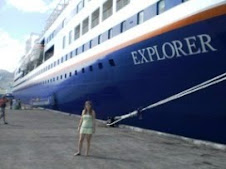
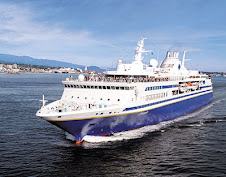
With that said, it’s an awesome experience to live aboard a ship. [We are often corrected for calling the ship a “boat” because this offends the captain and crew—they command a grand ship not just a little boat.] We’re lucky enough to be on a huge 25,000 ton ship that was built only eight years ago specifically for the Semester at Sea program. It has seven decks complete with two luxurious dining halls, a library, a computer lab, ten classrooms, a basketball court, a gym, a spa, a pool, a bar, a “campus” store, and other great facilities.
Though all the common areas in the ship are extremely nice I can’t say our cabins are as high class. My roommate and I joke that our room is a closet they converted to living quarters. We’re on the inside without a window so when you wake up it’s impossible to know whether it is 5:00 in the morning or noon. Still, it’s really not awful—we have our own bathroom and everything we really need. I guess that’s just the price you pay for living aboard a traveling vessel.
Even though we have everything you’d need at a normal college campus it’s impossible to forget that we live aboard a ship. The most shocking part of the experience for me thus far is how much the ship sways back and forth. The seas are relatively calm and the MV Explorer is pretty large but there’s never a time when you can’t feel the movement. I can’t really describe feeling but you feel as if you’re going to tip over in your chair yet your glass of water doesn’t slide from the table. It can be quite entertaining to watch groups of people walking down the hallway as they simultaneously move from side to side and sometimes collide with walls.
Our ship is home to almost 900 people. There are about 550 students from all over the US, around 40 professors, another 15 or so staff, the families of the faculty and staff, 30 or 40 “life-long-learners” [who are mostly retired people interested in learning and helping us to learn so they pay to join our voyage], and about 200 crew members. It’s great getting to interact with the professors’ young children and the friendly and wise life-long-learners who sit in on our classes and eat with us. The crew are also great. They are truly from all over the world: the UK, China, the Netherlands, the Philippines, Mexico, the Caribbean, and many many more places. [Our Captain is British--I always imagine that our ship would be on fire or sinking and we'd still hear his calm, clear British accent over the loud speaker. Before I met him I thought that all of the announcements were recordings.] Every day our beds are made, our rooms cleaned, our food served to us, and our plates are cleared by the friendly and seeming very happy crew. Life is good.
Really everyone I've encountered thus far has been awesome. All of the students are extremely friendly, outgoing people. The first night I flew into Canada I ran into other SAS students at the airport (it was pretty clear which kids were students as there aren’t many people that regularly fly into in the little city of Halifax). Immediately we were all talking and a few Dartmouth kids let me crash with them in their hotel so I didn’t have to look around for a place to stay at midnight. The next morning I was outside of the hotel waiting for a cab when a family from Geneseo, NY spotted me with my two huge duffel bags on wheels and offered to give me a ride to the ship since they were taking their daughter there as well. This open kindness amongst people is so common onboard. The life-long-learners really want to get to know students, as I said before crew are always cheery, the professors and their families are extremely glad to be here (it’s actually harder for a professor to get accepted to the program than it is for students), and obviously all of the students are stoked on traveling around the world with five hundred kids their age. As we sit out on the back dock watching the sunset and chatting we can’t help but occasionally throw in “I can’t believe we’re here right now.” It really is the coolest trip—we’re all so excited to be here even though for the time being “here” is precisely in the middle of nowhere.
There’s so much to tell you all about this extremely new experience for me but so much I need to get to (yes, somehow they keep us busy even though we’re isolated to a single environment in the middle of the open ocean). I’ll be sure to write again soon when I get a chance and when I have some more new and exciting things to tell you all about.
Thanks for following!
svc
I’m currently writing from the MV Explorer as we travel east towards Cadiz, Spain. We’ve traveled about a thousand nautical miles since Nova Scotia and have another 1,700 or so to go before we reach our next destination.
The closest point of land is a mere 455 nautical miles away—we are absolutely in the middle of nowhere. Yesterday I saw the first sign of life other than us as a cargo ship passed in the distance. Let me tell you, it was a huge deal. We were in the middle of class when someone spotted it and everyone immediately got up and ran to the windows and starred at it as if we were five year old kids who’d never seen a ship before.
With that said, it’s an awesome experience to live aboard a ship. [We are often corrected for calling the ship a “boat” because this offends the captain and crew—they command a grand ship not just a little boat.] We’re lucky enough to be on a huge 25,000 ton ship that was built only eight years ago specifically for the Semester at Sea program. It has seven decks complete with two luxurious dining halls, a library, a computer lab, ten classrooms, a basketball court, a gym, a spa, a pool, a bar, a “campus” store, and other great facilities.
Though all the common areas in the ship are extremely nice I can’t say our cabins are as high class. My roommate and I joke that our room is a closet they converted to living quarters. We’re on the inside without a window so when you wake up it’s impossible to know whether it is 5:00 in the morning or noon. Still, it’s really not awful—we have our own bathroom and everything we really need. I guess that’s just the price you pay for living aboard a traveling vessel.
Even though we have everything you’d need at a normal college campus it’s impossible to forget that we live aboard a ship. The most shocking part of the experience for me thus far is how much the ship sways back and forth. The seas are relatively calm and the MV Explorer is pretty large but there’s never a time when you can’t feel the movement. I can’t really describe feeling but you feel as if you’re going to tip over in your chair yet your glass of water doesn’t slide from the table. It can be quite entertaining to watch groups of people walking down the hallway as they simultaneously move from side to side and sometimes collide with walls.
Our ship is home to almost 900 people. There are about 550 students from all over the US, around 40 professors, another 15 or so staff, the families of the faculty and staff, 30 or 40 “life-long-learners” [who are mostly retired people interested in learning and helping us to learn so they pay to join our voyage], and about 200 crew members. It’s great getting to interact with the professors’ young children and the friendly and wise life-long-learners who sit in on our classes and eat with us. The crew are also great. They are truly from all over the world: the UK, China, the Netherlands, the Philippines, Mexico, the Caribbean, and many many more places. [Our Captain is British--I always imagine that our ship would be on fire or sinking and we'd still hear his calm, clear British accent over the loud speaker. Before I met him I thought that all of the announcements were recordings.] Every day our beds are made, our rooms cleaned, our food served to us, and our plates are cleared by the friendly and seeming very happy crew. Life is good.
Really everyone I've encountered thus far has been awesome. All of the students are extremely friendly, outgoing people. The first night I flew into Canada I ran into other SAS students at the airport (it was pretty clear which kids were students as there aren’t many people that regularly fly into in the little city of Halifax). Immediately we were all talking and a few Dartmouth kids let me crash with them in their hotel so I didn’t have to look around for a place to stay at midnight. The next morning I was outside of the hotel waiting for a cab when a family from Geneseo, NY spotted me with my two huge duffel bags on wheels and offered to give me a ride to the ship since they were taking their daughter there as well. This open kindness amongst people is so common onboard. The life-long-learners really want to get to know students, as I said before crew are always cheery, the professors and their families are extremely glad to be here (it’s actually harder for a professor to get accepted to the program than it is for students), and obviously all of the students are stoked on traveling around the world with five hundred kids their age. As we sit out on the back dock watching the sunset and chatting we can’t help but occasionally throw in “I can’t believe we’re here right now.” It really is the coolest trip—we’re all so excited to be here even though for the time being “here” is precisely in the middle of nowhere.
There’s so much to tell you all about this extremely new experience for me but so much I need to get to (yes, somehow they keep us busy even though we’re isolated to a single environment in the middle of the open ocean). I’ll be sure to write again soon when I get a chance and when I have some more new and exciting things to tell you all about.
Thanks for following!
svc
Thursday, August 27, 2009
Pre-Voyage
Hey friends and family!
I set up this blog to keep you all updated on what I’m up to this Fall as I circumnavigate the globe on my Semester at Sea voyage!
For those of you who don’t know much about what I’m doing, this Fall I am studying abroad in a rather unique way. The University of Virginia has a program called “Semester at Sea” on which you travel around the world (literally) on a large ship with 700 other students and faculty. Yes, we take real classes and actually do school work but we also have the time we’re docked in each port city to ourselves to explore the different countries.
I’m not really the blogging-type but it’s going to be difficult [and expensive] for me to contact any of you individually while abroad so I figured a blog would be the best and easiest way to update all of you at once. I’m sure I’ll be really busy but I’m going to try to keep this blog as up-to-date as possible. Also, if you need to contact me or just want to say hello the best way would be via e-mail (sarahvancleve@gmail.com).
My Fall 2009 voyage is planned as follows:
- Depart Halifax, Canada on August 28th
- Cadiz, Spain
- Casablanca, Morocco + Camel Riding in the Sahara!
- Accra, Ghana + Togo and Benin
- Cape Town, South Africa + Safari near Johannesburg!
- Port Louis, Mauritius
- Chennai, India
- Ho Chi Min City, Vietnam + the Mekong Delta
- Hong Kong, Beijing, and Shanghai, China
- Yokohama, Tokyo, and Kobe, Japan
- Oahu and the Big Island, Hawaii
- Arrive in San Diego on December 14th
- Then back to the East Coast for less than two weeks before snowboard season begins in Mammoth, CA!
Obviously there’s not much to tell you all at this point. Everything is packed and ready to go. I fly up to Halifax this evening, board the ship tomorrow, and then start the trek across the Atlantic. Of course last minute anxiety is kicking in--have I packed everything I need? what if my roommate is awful? is everyone on the ship going to get seasick when that hurricane traveling up the east coast hits us?--but I know that I have the most important things (passport, visas, credit cards, and the best immunity to exotic diseases that the developed world can supply) so I'm confident that everything will work out and I'm extremely excited to start this once-in-a-lifetime trip.
Well, I'm sure I'll have more exciting news once I've actually been “at sea” and in other countries but I hope you all get a chance every once in a while to check out what I’m doing this Fall.
Check back soon!
svc
Subscribe to:
Posts (Atom)